
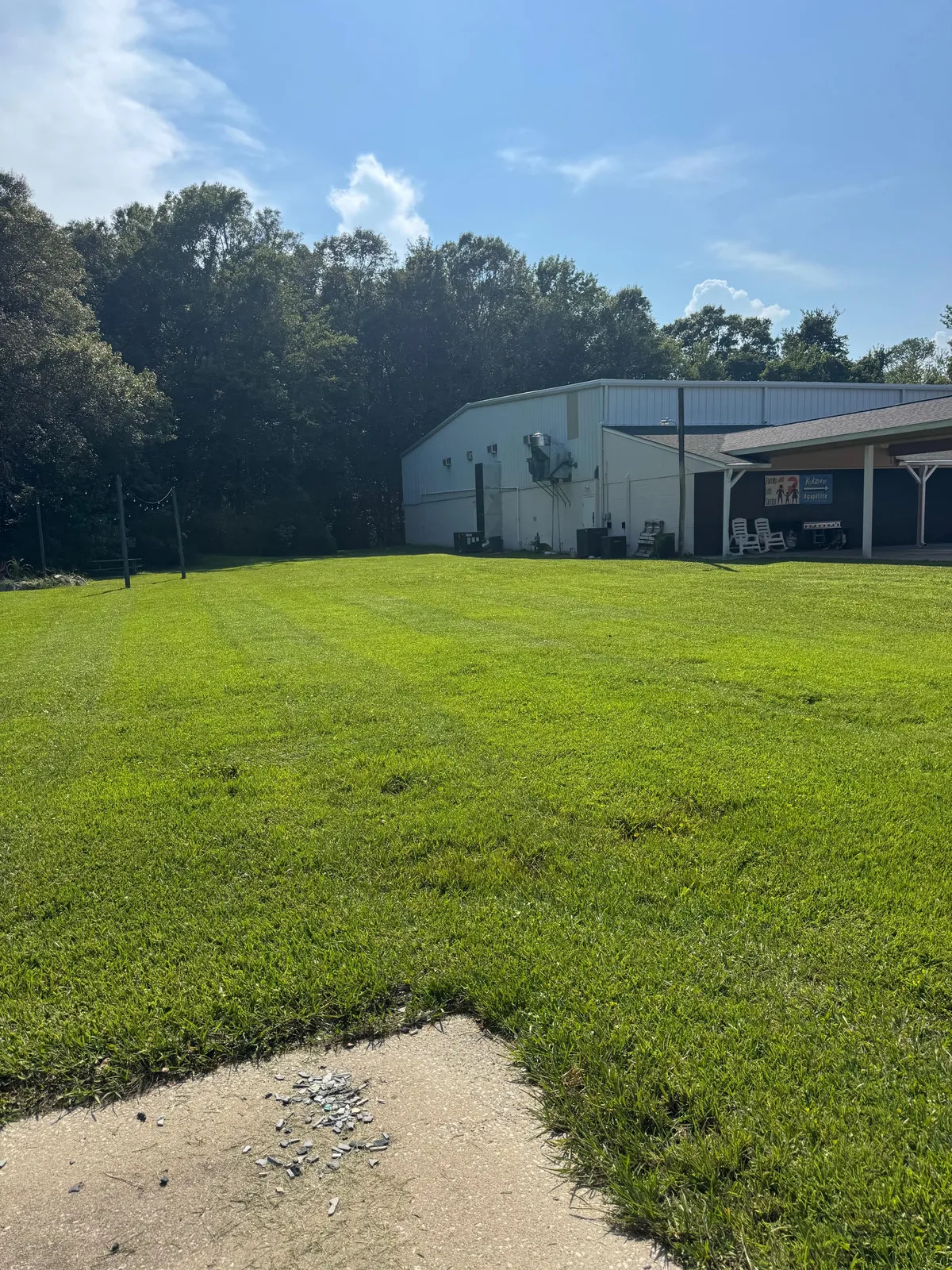
Commercial lawn care is easier to manage when the property, service scope, and communication process are clear before the first visit. For a business owner or property manager in Camden County, the goal is not simply to find someone who can mow. It is to set up a recurring plan that fits the site, protects access and appearance standards, and gives everyone a clear way to handle weather, changes, documentation, and billing.
Start with a commercial site review
A commercial site review is the right starting point because a business property cannot be scoped reliably from a street address alone. The review should identify the maintained areas, approximate size, slopes, buildings, beds, fences, walks, parking edges, gates, and any areas that are excluded. It is also the time to discuss the people who approve work and the person who should receive updates.
CrispCut’s commercial lawn maintenance service begins with a property or site review so access, cadence, appearance expectations, and scope can be considered together. A site-specific review helps prevent a quote from assuming that every property has the same equipment needs or finish standard.
Set a mowing cadence that fits the site
Commercial mowing cadence should reflect the property’s growth, visibility, use, and operating schedule. A storefront, office, community-facing facility, or larger property may need a different rhythm from a low-traffic back lot. The right schedule is the one that keeps the agreed areas presentable without creating unnecessary visits or allowing the property to fall behind.
Talk through what happens during faster growth, slower periods, and weather interruptions. Do not assume a residential weekly or biweekly pattern applies automatically to a commercial property. The commercial scope is recurring and site-specific, and the cadence should be confirmed after the review rather than guessed from the property type.
Plan access and scheduling around the business
Access planning is part of the service, not an afterthought. Identify which gates are used, whether they are locked, where equipment can enter, and whether the property has delivery windows, tenant activity, customer traffic, or restricted hours. A property manager should also identify a backup contact when the usual site contact is away.
Scheduling should protect both the work and the operation of the property. Share recurring events, busy periods, construction, landscape changes, and areas that cannot be entered on a particular day. If access changes, communicate it before the scheduled visit so the crew can review the impact instead of arriving to an avoidable stop.
Define appearance standards before work begins
“Keep it maintained” can mean different things to different stakeholders. Define the visible standard in practical terms: which lawn areas are included, how edges should look, whether string trimming is expected around signs and fences, and which applicable hard surfaces should be blown clear after service. Note any areas where a neat transition matters because customers, residents, or employees see them first.
Photos, a simple site map, or a written scope can help the property manager and service provider use the same reference. Appearance standards should also distinguish recurring mowing from separately scoped cleanup, storm debris, or recovery work. Clear boundaries make it easier to evaluate the completed visit fairly.
Agree on communication expectations
Decide who receives routine updates, weather notices, access questions, and scope-change requests. A useful communication plan names the primary contact, backup contact, preferred channel, and the type of issue that needs same-day attention. It should also explain how the property manager will report a concern and how the provider will respond.
Good communication is especially important when multiple people use the property. A tenant, facilities contact, owner, and accounting team may each have part of the information. Keeping the service contact and approval path clear reduces duplicated instructions and helps changes reach the person responsible for the site.
Clarify invoicing and payment workflow
Commercial service should have a billing process that is understood before recurring work begins. Confirm the legal billing name, invoice recipient, purchase-order or vendor-setup requirements, preferred delivery method, payment contact, and approval steps. If invoices need a property name, location code, work-order reference, or supporting note, include that requirement in the initial scope discussion.
It is also useful to agree on how extra work is handled. Yard cleanup, recovery, storm-related debris, or a change in the maintained area may need a separate scope and approval before it is added to an invoice. A clear approval path helps prevent surprises for both the property manager and the service provider.
Prepare insurance and COI documentation early
Many commercial owners and management companies require vendor documentation before a contractor can work on site. If your organization needs proof of insurance, a certificate of insurance (COI), additional-insured wording, or a specific certificate holder, say so before scheduling. Provide the exact requirements and the recipient details rather than waiting until the first visit.
CrispCut identifies itself as fully insured, but each organization may have its own documentation workflow. Treat insurance and COI requirements as part of onboarding, alongside the site address, access plan, scope, contacts, and billing information. That keeps administrative approval from becoming the reason a ready property cannot be scheduled.
Coordinate multiple Camden County properties
Multi-property coordination benefits from a single source of truth. Keep a list of each address, site contact, access instructions, appearance notes, cadence, invoice reference, and current status. If the properties are nearby, ask whether they can be reviewed and planned together; if they differ, keep their scopes separate so one site’s needs do not get assumed for another.
Changes should be reported by property, not only as a general message. A locked gate at one location, a new tenant at another, or a construction area at a third site can affect scheduling differently. Clear property labels in communication and invoices make follow-up easier for managers and accounting teams.
Know when a site-specific scope is needed
A site-specific scope is needed when the property has multiple lawn areas, unusual access, larger equipment requirements, high-visibility edges, different service zones, or standards that cannot be described by a generic mowing request. It is also needed when the initial condition is beyond ordinary recurring maintenance. The scope should identify what is included, what is excluded, how cadence is determined, and what requires separate approval.
For the broader property-manager program, review the commercial lawn care program. For local route context, see the Camden County service area and the operational lawn-care FAQ. When the property is ready for review, use the commercial quote request to share the address, scope, access, contacts, and documentation requirements.
A practical commercial readiness checklist
- List every maintained area, excluded area, gate, access point, and site contact.
- Confirm cadence, appearance standards, weather communication, and scheduling restrictions.
- Prepare billing details, invoice references, approval steps, and any purchase-order requirements.
- Share insurance or COI requirements before the first scheduled visit.
- Keep each property’s scope and communication history separate when coordinating multiple locations.